Duration: 00:23:01
Family and Partner Considerations During Recruitment of Academic Faculty: Part 2
In part two of our latest Pediatric Insight conversation, members of the Child Health Advisory Council (CHAC) reflect on the institutional approaches that help ensure recruitment processes remain thoughtful, inclusive, and successful over the long term. The conversation highlights the importance of early communication, collaboration across departments, and recognizing the many factors that influence a candidate’s decision to join and stay with an institution.
When institutions approach recruitment with that level of care and intentionality, it strengthens both faculty retention and the communities we ultimately serve.
Watch the Conversation.
Duration: 00:17:03
Family and Partner Considerations During Recruitment of Academic Faculty: Part 1
When recruiting academic faculty, the conversation extends far beyond contracts and credentials. Family and partner considerations often play a pivotal role in whether a candidate ultimately says yes.
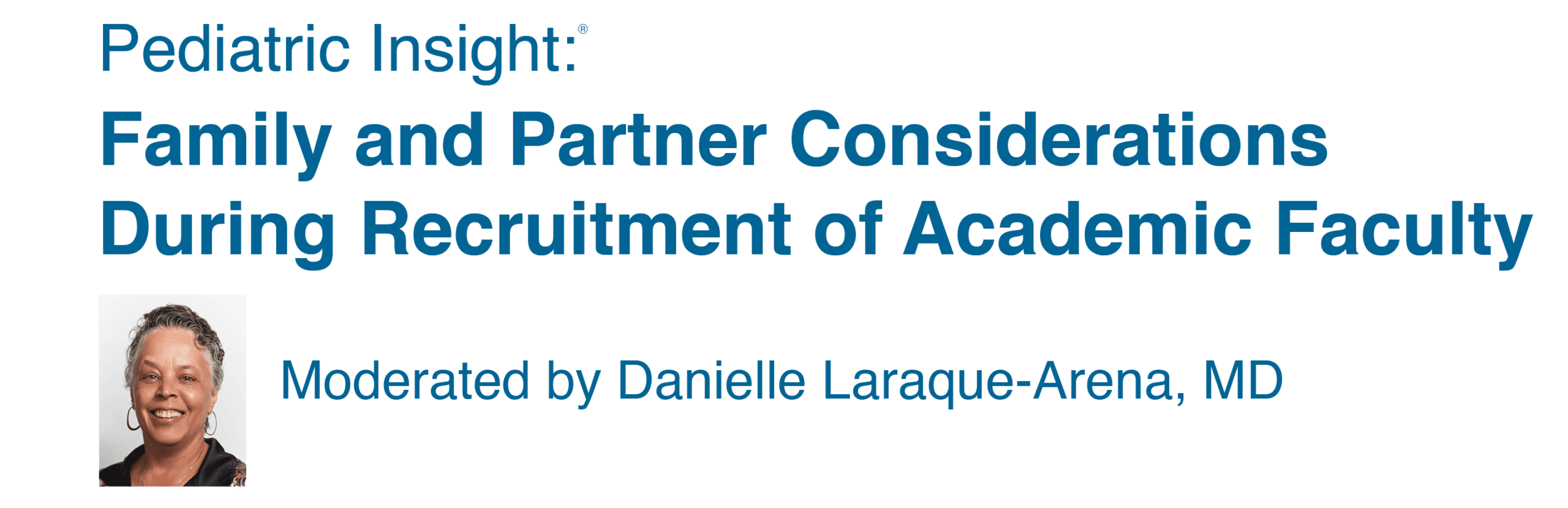
In this Pediatric Insight conversation, Danielle Laraque-Arena, MD, FAAP, moderates a thoughtful discussion where the Child Health Advisory Council (CHAC) members cover how institutions can strategically and authentically address family needs throughout the recruitment process.
Subscribe: Apple Podcasts | Spotify
Watch the Conversation.
Meet the Panel.

Wesley D. Millican, MBA
CEO and Physician Talent Officer, CareerPhysician

Danielle Laraque-Arena, MD, FAAP
President and Professor Emerita, SUNY Upstate Medical University

Jon Hayes
Executive Vice President, Child Health, CareerPhysician
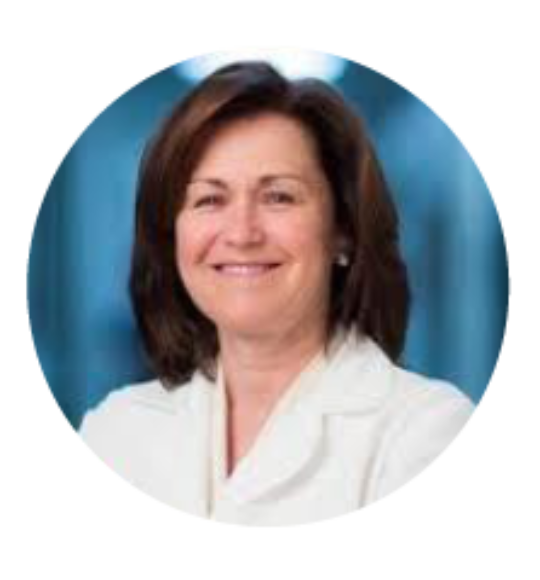
Valerie Opipari, MD
Professor and Chair Emerita, University of Michigan School of Medicine and C.S. Mott Children's Hospital

Bruce Rubin, MEngr, MD, MBA, FRCPC
Professor and Chair Emeritus of Pediatrics, Children's Hospital of Richmond at Virginia Commonwealth University

Robert S. Sawin, MD
Pediatric Surgeon, Emeritus Professor and Surgeon in Chief, Seattle Children's Hospital and University of Washington

F. Bruder Stapleton, MD
Professor and Chair Emeritus, University of Washington School of Medicine; Chair, Child Health Advisory Council

Arnold (Arnie) Strauss, MD
Emeritus Professor and Chair of Pediatrics, University of Cincinnati College of Medicine and Cincinnati Children's Hospital Medical Center
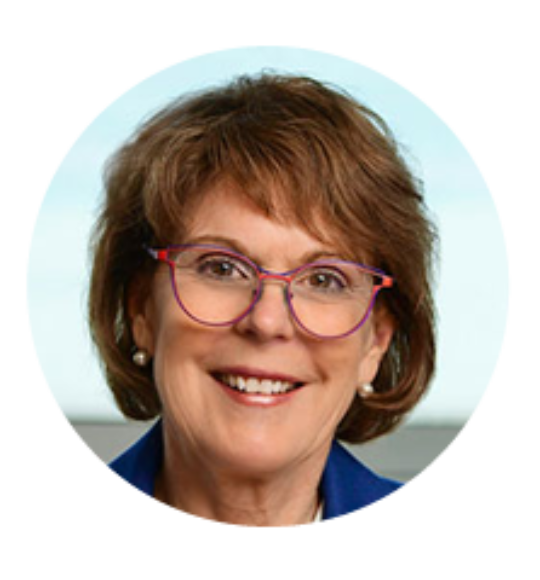
Peggy Troy, MSN, RN
Emerita President and Chief Executive Officer, Children's Wisconsin
Learn more about the Child Health Advisory Council. Click here.
Have a question or a topic you’d like us to discuss? Send us an email.
Listen to the Podcast.
Duration: 00:17:32
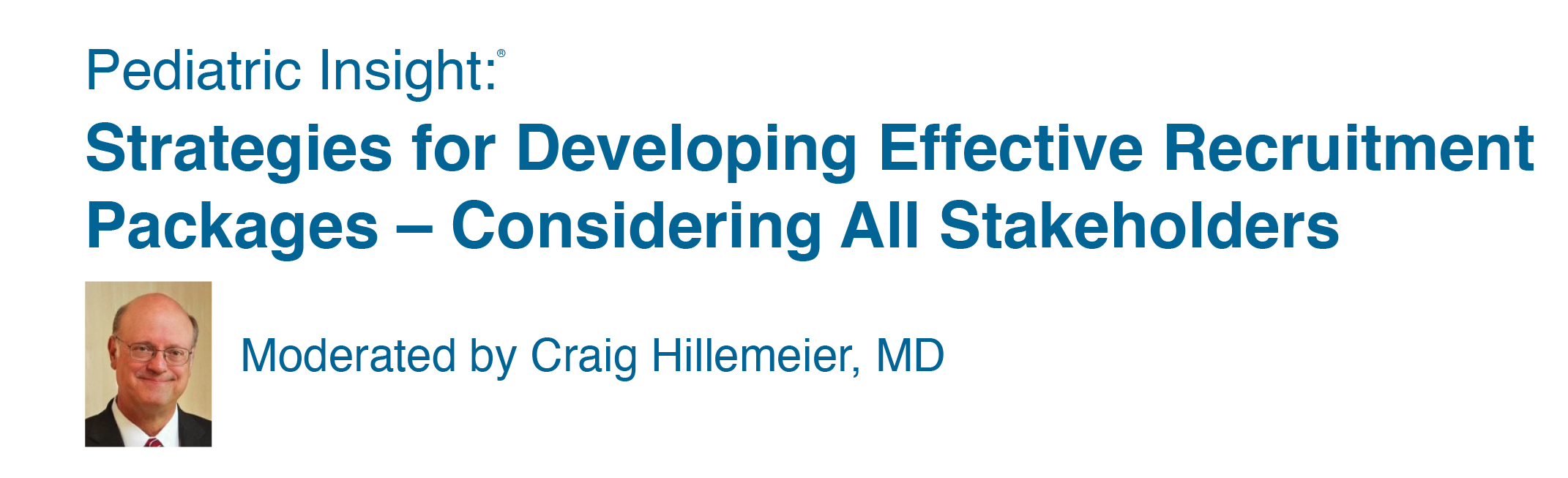
Strategies for Developing Effective Recruitment Packages – Considering All Stakeholders
Funds that flow for supporting academic physician recruitment are often varied across health systems. In the latest Pediatric Insight episode, “Strategies for Developing Effective Recruitment Packages – Considering All Stakeholders,” moderated by Child Health Advisory Council member, Craig Hillemeier, MD, council members discuss strategies to get the support needed to recruit top candidates.
From strategic planning to communication, flexibility and presenting a unified voice to candidates, this episode offers practical insights for pediatric leaders navigating today’s competitive recruitment environment.
Subscribe: Apple Podcasts | Spotify
Watch the Conversation.
Meet the Panel.

Wesley D. Millican, MBA
CEO and Physician Talent Officer
CareerPhysician

Craig Hillemeier, MD
CEO Emeritus, Penn State Health
Dean Emeritus, Professor of Pediatrics, Penn State University
Pediatric Gastroenterologist

Arnold Strauss, MD
Professor and Chair Emeritus of Pediatrics
Children’s Hospital of Richmond at Virginia Commonwealth University
Pediatric Cardiologist

F. Bruder Stapleton, MD
Professor and Chair Emeritus,
University of Washington School of Medicine
Pediatric Nephrologist

Peggy Troy, MSN, RN
Emerita President and CEO, Children’s Wisconsin

Robert S. Sawin, MD
Emeritus Professor, Surgeon-in-Chief, Seattle Children’s Hospital and University of Washington,
Pediatric Surgeon

Bruce Rubin, MEngr, MD, MBA, FRCPC
Professor and Chair Emeritus of Pediatrics, Children’s Hospital of Richmond at Virginia Commonwealth University
Pediatric Pulmonologist

Jon Hayes
Executive Vice President, Child Health, CareerPhysician
Former President, Oklahoma Children’s Hospital, OU Health
Learn more about the Child Health Advisory Council. Click here.
Have a question or a topic you’d like us to discuss? Send us an email.
It is increasingly clear that 2026 will be a pivotal moment within the academic child health leadership continuum. Escalating workforce shortages, rising burnout, national policy changes and increasing financial pressures are rapidly reshaping the strategies and tactics leaders must embrace for meaningful advancement across all missions. While solutions are complex and challenging, 2025 has shown us leadership opportunities for high impact:
As we move into the new year, I look forward to sharing perspectives and learning alongside colleagues who are navigating this rapidly changing environment.
Based on what we are seeing, high-impact leaders in 2026 will consistently demonstrate four core behaviors:
Be Proactive
Evolving beyond traditional university and HR faculty recruitment and retention practices—many of which remain adult-medicine centric—is required this year. Effective leaders will proactively engage in rethinking faculty talent strategies early in 2026 and will seek to formalize innovative best practices and programs in partnership with their children’s hospital colleagues. Relying solely on advertisements and limited in-house resources will be futile and will continue to drive escalating faculty shortages and retention challenges.
Be Present
Faculty are under extraordinary stress and dealing with unprecedented levels of burnout and moral injury. Leaders achieving impact in these areas are viewed as “present” by their faculty in both clinic and hospital settings. Visibility, engagement and accessibility matter more than ever.
Be an Advocate
Competitive compensation is an absolute requirement for effective recruitment and retention strategies. All strategies for solving current workforce issues will be a risk if competitive compensation remains unsolved. In 2026, pediatric subspecialty compensation will need to be at or above the 50% for faculty and 75% for leaders. Determined diligence and advocacy with health system and university partners is the only path for getting there. Medical Students and undergraduates are watching!
Be a Delegator
Leadership styles are evolving from top-down toward greater delegation and autonomy. Such cultures appear to me to be healthier and suffering from fewer retention challenges, especially with mid-career and younger faculty. The intentional creation of opportunities for growth and development, even in small measures, will be critical.
We believe academic pediatrics can make real strides forward in 2026 but we must be diligent and look forward to seeing the innovative solutions that will evolve from the efforts of effective leaders who understand that strong leadership is no longer optional and is essential to protecting patient care, supporting faculty wellbeing and sustaining the academic mission for the next generation.
Wesley Millican | Post date: February 2026
Listen to the Podcast.
Duration: 00:15:12
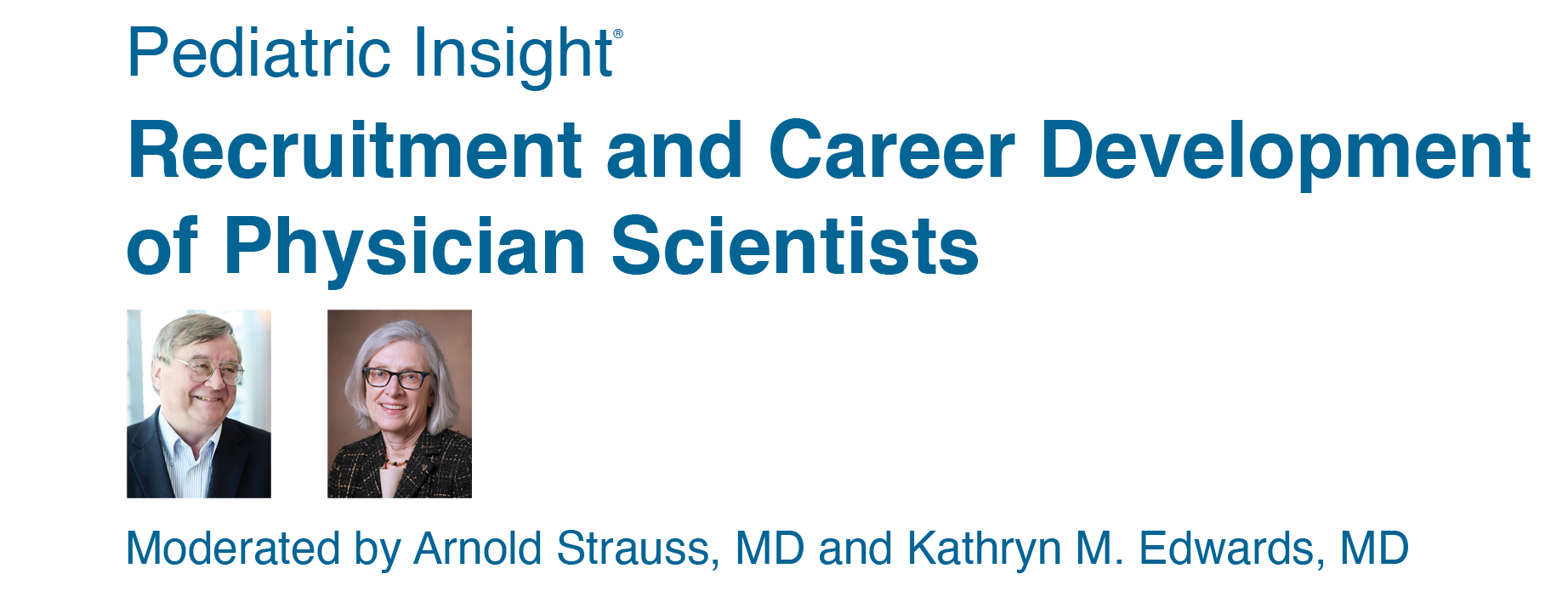
Recruitment and Career Development of Physician Scientists | Part Two
Drs. Arnold Strauss and Kathryn M. Edwards continue the conversation on physician-scientists. Topics covered include protected time, lab space, Scientific Oversight Committee and maintaining long-term perspective.
Special guests for part two include Drs. D. Brent Polk, Richard Shugerman and Danielle Laraque-Arena.
Subscribe: Apple Podcasts | Spotify
Watch the Conversation.
Resources and Related Topics.
Part 2
Part 1
- Click here to view Dr. Edwards’ presentation, Recruitment of Clinical Investigator Physician Scientists.
Meet the Panel.
F. Bruder Stapleton, MD
Pediatric Nephrologist
Arnold Strauss, MD
Pediatric Cardiologist

Kathryn M. Edwards, MD
Pediatric Infectious Disease Physician

John Frohna, MD, MPH
General Academic Pediatrics

Danielle Laraque-Arena, MD
Child Abuse Pediatrics

Marva Moxey-Mims, MD
Pediatric Nephrologist

D. Brent Polk, MD
Gastroenterologist

Richard Ruddy, MD
Pediatric Emergency Medicine Physician

Richard Shugerman, MD
Pediatric Emergency Medicine Physician
Learn more about the Child Health Advisory Council. Click here.
Have a question or a topic you’d like us to discuss? Send us an email.
Listen to the Podcast.
Duration: 00:21:52
Wellness Issues Facing Pediatric Leaders | Part Two
In part two of our Pediatric Insight series on faculty wellness issues, pediatric leaders take a deeper look at one of the most pressing challenges facing healthcare today: the generational shift in how physicians define work, balance and meaning.
Moderated by Ambika Ashraf, MD, with discussion co-leads Christine Finck, MD and Peggy Troy, MSN, RN, this episode explores how institutions can thoughtfully adapt to evolving expectations around flexibility, purpose, and sustainability without losing sight of clinical excellence or organizational goals.
Drawing on real-world leadership experience and advisory insight from the Child Health Advisory Council’s pediatric specialty experts, this candid discussion offers practical perspective for leaders navigating change across generations.
Subscribe: Apple Podcasts | Spotify
Watch the Conversation.
Resources and Related Topics.
Part 2
Part 1
- Crucial Conversations: Tools for Talking When Stakes Are High, Joseph Grenny and Kerry Patterson, McGraw Hill-Ascent Audio, 2021.
- Physician Work Environment and Well-being, Lara Goiter, MD, Patrick G. O’Malley, MD, MPH, Rita F. Redberg, MD, Mac, JAMA Internal Medicine, 2017
Meet the Panel.
F. Bruder Stapleton, MD
Pediatric Nephrologist

Ambika Ashraf, MD
Pediatric Endocrinologist

Christine Finck, MD
Pediatric General Surgeon
Peggy Troy, MSN, RN
Emerita President and CEO,
Children’s Wisconsin
Robert Sawin, MD
Pediatric Surgeon

Kenya McNeal-Trice, MD
Medical Education
Marva Moxey-Mims, MD
Pediatric Nephrologist
Richard Ruddy, MD
Pediatric Emergency Medicine Physician

Jim Wheless, MD
Pediatric Neurologist

Louis Bell, MD
Pediatric Hospital Medicine Physician
View the Child Health Advisory Council’s bios. Click here.
Have a question or a topic you’d like us to discuss? Send us an email.
Listen to the Podcast.
Duration: 00:23:45
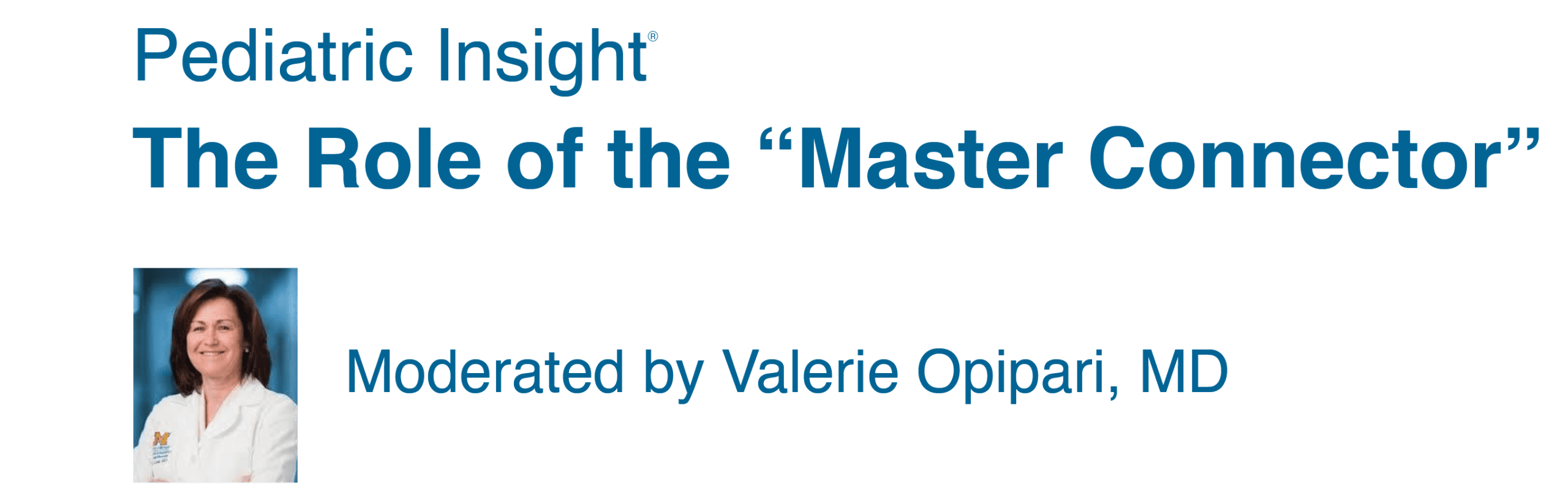
How “Master Connectors” Quietly Transform Careers
As we close out our Pediatric Insight Conversations series on mentorship, the Child Health Advisory Council (CHAC) turns to a topic that may be the most influential and the least discussed driver of career satisfaction in academic pediatrics: the master connector.
Inspired by Malcolm Gladwell’s concept and shaped by decades of leadership experience, the panel explores how master connectors do far more than match mentors and mentees. They actively shape cultures, open doors, accelerate careers, and most importantly – help protect clinicians from burnout.
As Dr. Craig Hillemeier put it, “Mentorship is one of the few things in medicine that creates a truly positive impact for both the mentor and the mentee. A master connector ensures people understand that and helps make those relationships actually work.”
Subscribe: Apple Podcasts | Spotify
Watch the Conversation.
Resources and Related Topics.
- Measuring Mentorship Success, CareerPhysician.com, Valerie Opipari, MD, moderator
- The Mentor Role and Responsibilities, CareerPhysician.com, Valerie Opipari, MD, moderator
- The Master Connector: The Ultimate Guide to Building Impactful Connections for Life & Business, Nichole Harmon-Pointdujour, 2025
- Advocacy & Mentorship, CareerPhysician.com, Robert Sawin, MD, Craig Hillemeier, MD
- What I wish I knew in medical school about finding a mentor, ama-assn.org, Sara Berg, MS, Feb. 13, 2023.
- Mentoring in medicine, NIH.gov, Savithiri Ratnapalan. Feb. 2010.
- Fellows Survival Guide: Choosing a Mentor, Pediatric Infectious Diseases Society, pids.org
- What Is a Mentor? Suzanne Koven, M.D. n engl j med 390;8 nejm.org. February 22, 2024.
Meet the Panel.
Wesley D. Millican, MBA
CEO and Physician Talent Officer

Valerie Opipari, MD
Pediatric Hematologist/Oncologist
Craig Hillemeier, MD
Pediatric Gastroenterologist
Bruce Rubin, MEngr, MD, MBA, FRCPC
Pediatric Pulmonologist
Robert Sawin, MD
Pediatric Surgeon
Arnold (Arnie) Strauss, MD
Pediatric Cardiologist
F. Bruder Stapleton, MD
Pediatric Nephrologist
View the Child Health Advisory Council’s bios. Click here.
Have a question or a topic you’d like us to discuss? Send us an email.
Listen to the Podcast.
Duration: 00:26:12
How Do You Measure Mentorship Success?
In part two of our Pediatric Insight mentorship series, we continue the conversation addressing how to measure mentorship success.
In this episode, the Child Health Advisory Council (CHAC) members discuss important questions such as:
- Measuring mentoring success and impact
- Navigating common challenges
- Identifying and resolving mentor-mentee conflicts
- Mentoring and supporting new leaders and recruits
Subscribe: Apple Podcasts | Spotify
Watch the Conversation.
Resources and Related Topics.
- The Mentor Role and Responsibilities, CareerPhysician.com, Valerie Opipari, MD
- Advocacy & Mentorship, CareerPhysician.com, Robert Sawin, MD, Craig Hillemeier, MD
- What I wish I knew in medical school about finding a mentor, ama-assn.org, Sara Berg, MS, Feb. 13, 2023.
- Mentoring in medicine, NIH.gov, Savithiri Ratnapalan. Feb. 2010.
- Fellows Survival Guide: Choosing a Mentor, Pediatric Infectious Diseases Society, pids.org
- What Is a Mentor? Suzanne Koven, M.D. n engl j med 390;8 nejm.org. February 22, 2024.
Meet the Panel.
Wesley D. Millican, MBA
CEO and Physician Talent Officer
Valerie Opipari, MD
Pediatric Hematologist/Oncologist
Bruce Rubin, MEngr, MD, MBA, FRCPC
Pediatric Pulmonologist
Craig Hillemeier, MD
Pediatric Gastroenterologist
F. Bruder Stapleton, MD
Pediatric Nephrologist
Robert Sawin, MD
Pediatric Surgeon
Peggy Troy, MSN, RN
Emerita President & CEO
Children’s Wisconsin
Arnold (Arnie) Strauss, MD
Pediatric Cardiologist

Jon Hayes
Executive Vice President, Child Health
Former President, Oklahoma Children’s Hospital
View the Child Health Advisory Council’s bios. Click here.
Have a question or a topic you’d like us to discuss? Send us an email.
Listen to the Podcast.
Duration: 00:32:34
The Power of Mentorship
This week, we kick off a three-part series about how mentorship, coaching and sponsorship is shaping the next generation of pediatric leaders.
In this first episode, moderated by Valerie Opipari, MD, our expert panel dives into what makes mentorship effective and enduring. They answer:
- How does a mentor’s role differ from that of a coach or sponsor?
- How can young clinicians identify the right mentors to guide their careers?
- What traits define a successful mentor–mentee relationship?
Packed with practical insights and real experiences, this conversation offers inspiration and guidance for both mentors and mentees in academic medicine.
Subscribe: Apple Podcasts | Spotify
Watch the Conversation.
Resources and Related Topics.
- Advocacy & Mentorship, CareerPhysician.com, Robert Sawin, MD, Craig Hillemeier, MD
- What I wish I knew in medical school about finding a mentor, ama-assn.org, Sara Berg, MS, Feb. 13, 2023.
- Mentoring in medicine, NIH.gov, Savithiri Ratnapalan. Feb. 2010.
- Fellows Survival Guide: Choosing a Mentor, Pediatric Infectious Diseases Society, pids.org
- What Is a Mentor? Suzanne Koven, M.D. n engl j med 390;8 nejm.org. February 22, 2024.
Meet the Panel.
Wesley D. Millican, MBA
CEO and Physician Talent Officer
Valerie Opipari, MD
Pediatric Hematologist/Oncologist
Bruce Rubin, MEngr, MD, MBA, FRCPC
Pediatric Pulmonologist
Craig Hillemeier, MD
Pediatric Gastroenterologist
F. Bruder Stapleton, MD
Pediatric Nephrologist
Robert Sawin, MD
Pediatric Surgeon
Peggy Troy, MSN, RN
Emerita President & CEO
Children’s Wisconsin
Arnold (Arnie) Strauss, MD
Pediatric Cardiologist
View the Child Health Advisory Council’s bios. Click here.
Have a question or a topic you’d like us to discuss? Send us an email.
Listen to the Podcast.
Duration: 00:28:34
Integrating Full-Time Clinicians into Pediatrics
Pediatric departments are stretched by unprecedented clinical demand. How do you fully integrate full-time clinicians into the academic mission without losing alignment across the university, hospital and community?
In this episode, Dr. Arnie Strauss leads a candid discussion on what actually moves the needle.
What you’ll learn:
- Bridging the “university vs. hospital” gap
- Achieving diplomacy with data
- How to set clear expectations & accountability
- The hospital point of view
- A look ahead on achieving team-based care
Subscribe: Apple Podcasts | Spotify
Watch the Conversation.
Resources and Related Topics.
- The Evolving PHM Workforce: Shortages and Opportunities, American Academy of Pediatrics, Alexandra Kilinsky, DO; Jennifer Reese, MD, July 14, 2025.
- The Pediatric Health Care Workforce Landscape, The Future of Pediatric Subspecialty Physician Workforce: Meeting the Needs of Infants, Children and Adolescents, NIH National Library of Medicine, National Academies Press (US). Sept. 7, 2023.
- Two Steps Forward, One Step Back: The Complexity of Accurately Defining and Measuring Clinical Activity in Academic Pediatrics, Susan Kline, MS; Anne M. Reed, MD; Liz McCarty, MS; Gil Park, MHA; Lucky Jain, MD; Morris Gessouroun, MD. The Journal of Pediatrics, Volume 259, 113446, August 2023.
Meet the Panel.
Wesley D. Millican, MBA
CEO and Physician Talent Officer
Arnold (Arnie) Strauss, MD
Pediatric Cardiologist
Danielle Laraque-Arena, MD, FAAP
Child Abuse Pediatrics
Robert Sawin, MD
Pediatric Surgeon
Bruder Stapleton, MD
Pediatric Nephrologist
Craig Hillemeier, MD
Pediatric Gastroenterologist
Jon Hayes
Executive Vice President, Child Health, CareerPhysician
View the Child Health Advisory Council’s bios. Click here.
Have a question or a topic you’d like us to discuss? Send us an email.
Listen to the Podcast.
Duration: 00:39:54
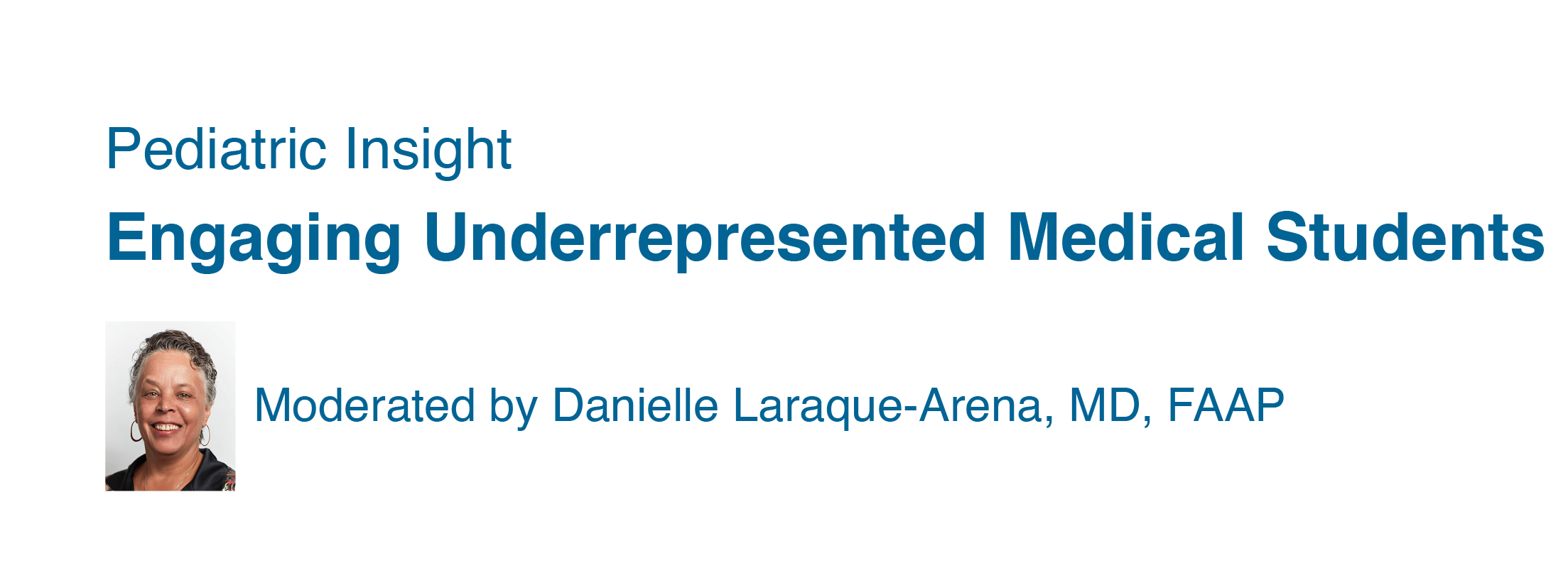
Leadership Strategies to Engage Underrepresented in Academic Child Health
The latest Pediatric Insight episode tackles a critical question: How do we ensure the future of pediatrics reflects the diversity of the children and families we serve?
Moderator Danielle Laraque-Arena, MD, with special guests Lisa Eiland, MD and Colin Orr, MD, MPH, explore:
- The most compelling reasons medical students choose a career in pediatrics
- What institutions can do to attract and support underrepresented in medicine (URiM) students
- The challenges and opportunities in strengthening the pipeline of diverse pediatric leaders.
This conversation offers practical insights for academic leaders to shape a more inclusive future for child health.
Host: Wesley Millican, MBA
Moderator: Danielle Laraque-Arena, MD, FAAP
Special guests:
Lisa Eiland, MD, Division Chief, Neonatology, Joseph M. Sanzari Children’s Hospital, Hackensack University Medical Center
Colin Orr, MD, MPH, Associate Professor of Pediatrics, General Pediatrics, Vanderbilt University Medical Center, Monroe Carrel, Jr. Children’s Hospital at Vanderbilt
Our panel: Arnold Strauss, MD; Robert Sawin, MD; Craig Hillemeier, MD; Bruder Stapleton, MD
Subscribe: Apple Podcasts | Spotify
Watch the Conversation.
Resources and Related Topics.
Meet the Panel.
Wesley D. Millican, MBA
CEO and Physician Talent Officer
Danielle Laraque-Arena, MD, FAAP
Child Abuse Pediatrics

Lisa Eiland, MD
Neonatologist

Colin Orr, MD, MPH
Pediatrician

Arnold (Arnie) Strauss, MD
Pediatric Cardiologist
Robert Sawin, MD
Pediatric Surgeon
Bruder Stapleton, MD
Pediatric Nephrologist
Craig Hillemeier, MD
Pediatric Gastroenterologist
View the Child Health Advisory Council’s bios. Click here.
Have a question or a topic you’d like us to discuss? Send us an email.